
This is Part 3 of a three-part series. Part 1 on Spent Goods and Part 2 ran on Organic Lifestyle. If you haven’t read them yet, go back and start there — this one’s the ending, and it’ll mean more with the rest of the odyssey behind it.
There’s one part of this trip I haven’t figured out how to write about gracefully, so I’m just going to write about it plainly instead.
Towards the end of my trip, I experienced a heatwave firsthand — temperatures over 39°C. At the time, I wasn’t aware that a heat wave could trigger a severe gout attack. It’s a hereditary condition I’ve managed with medication and significant lifestyle changes for the past 15 years. If you’ve never experienced one, it’s hard to describe how completely it can take you out — the pain settled into my foot to the point where I genuinely could not walk, like glass in the joint with every step. Not “tough it out and limp along” couldn’t walk, but stuck, in a foreign country, with places to be and no way to get there on my own two feet. It’s disabling in a way I wasn’t prepared for.
It’s well understood that extreme heat and dehydration can trigger or worsen gout flares, and I have no doubt the heatwave played a role in the timing of mine. Which put me, briefly and involuntarily, inside the thing I’d gone to France to think about from the outside. I’d spent the whole trip observing how a country is adapting to a warming world — green roofs, food waste laws, sustainability certifications, energy grades on real estate listings — and here I was, on the ground, experiencing one small, personal consequence of that same warming world in my own body. It’s one thing to read that heatwaves are becoming more frequent and more intense. It’s another to be temporarily disabled by one.
I don’t say that to be dramatic. Health authorities reported over 2,000 excess deaths across France during six days at the peak of that same June heatwave. I got a few uncomfortable days out of it — a small, involuntary taste of something a lot of people live with far more often, and far more severely, than I just did. Elderly folks. People with chronic conditions. Outdoor workers with no choice but to be out in it. As heatwaves stack up year over year, that list of people affected only grows. Plenty of people don’t get to go back to being fine once the trip is over.
What got me through it, practically speaking, was something I want to specifically acknowledge: airport wheelchair assistance was available to me, free of charge, no fuss, no paperwork fight. I could request it and be picked up, moved ahead of lines, and gotten to where I needed to go, without having to rely on a foot that simply wasn’t going to cooperate. I’ve thought about that a lot since getting home. It’s a small thing in the scheme of a country’s infrastructure, but it’s also exactly the kind of thing that reveals what a society has actually decided to prioritize. Somewhere, someone made the call that accessibility shouldn’t come with a cost or a hurdle attached to it. When you’re the one who needs it, that decision stops being abstract policy and becomes the difference between getting home and not.
The lesson I do take from it is this: we need to keep supporting both the top-down policies and the grassroots movements that push for the world we actually want — ensuring we treat people equally, whether they need a wheelchair or not, whether they call themselves an environmentalist or not. Just gratitude for a service that met me exactly when I needed it, and a clearer, more physical understanding of why building a society that adapts to a hotter world, and takes care of the people in it while doing so, isn’t optional. It’s already here.
Homework for Organic Lifestyle
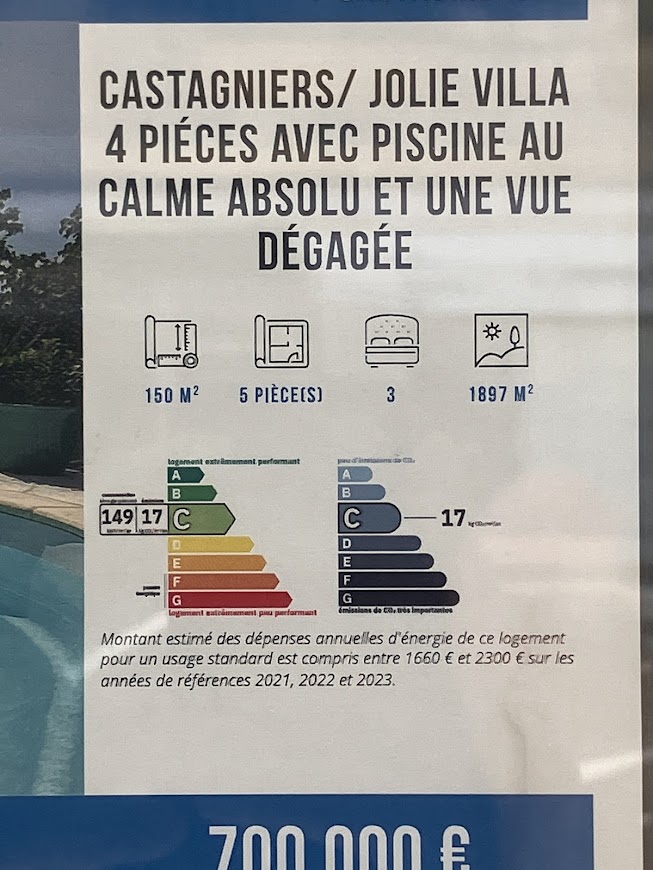
I really liked France’s energy performance for housing, and it really highlighted my own heating dependency on fossil fuels — not in the abstract, policy-paper sense, but in the “this is genuinely how I heat my own home” sense. It’s not a dependency that’s going anywhere on its own, and if anything, between climate volatility and geopolitical instability, it’s more likely to keep increasing than decrease. That trip made it feel less like someone else’s problem to solve and more like mine to start chipping away at.
So I’ve started looking into what reducing that exposure could actually look like for me, beginning with whether a heat pump is even feasible for my own condo — swapping out the gas combi boiler for a heat pump <– Click over to Organic Lifestyle if you want to follow along with what I’m finding.
Homework for Spent Goods
I want to explore whether we could recreate that same French regional specialization here — Menton’s lemons, Nice’s Salade Niçoise — what’s Toronto’s equivalent?
France knows exactly what it is. Every region I visited seemed to know precisely what made it distinct, and took real pride in protecting that distinctness — through law, through certification, through the simple act of a farmer hand-harvesting a lemon on a hillside too steep for a machine.
Toronto doesn’t have that same certainty. Ask someone what our Salade Niçoise is, and you’ll get a shrug — or five different answers, because this city doesn’t eat like one place. It eats like a hundred neighbourhoods stacked on top of each other, each one holding onto its own version of what a good meal looks like. Even our pizza is on a spectrum, reflecting the many ethnicities that make up this city — from Descendant’s pizza, which took first place in Montreal’s national pan pizza competition with a pie built on Sri Lankan, Jamaican, and Indian flavours, to Pizzeria Badiali’s New York style, to Four Hands’ sourdough base.
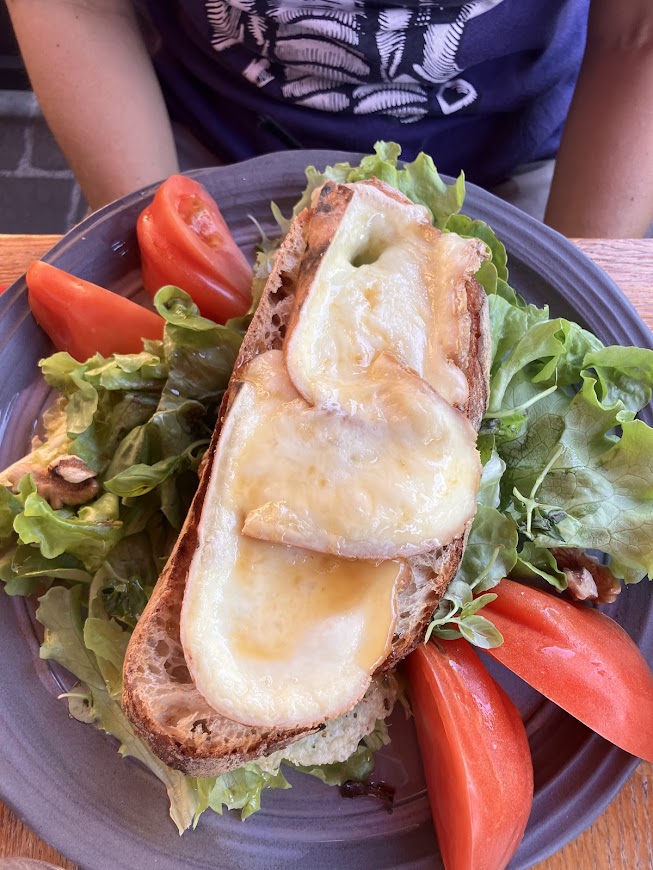
Toronto Doesn’t Have its own Sandwich Yet. Let’s Fix That.
Every great food city has one thing everyone agrees on. Montreal has its bagel. New York has its slice. Ask someone what Toronto’s is, and you’ll get a shrug — or five different answers, because this city doesn’t eat like one place. It eats like a hundred neighbourhoods stacked on top of each other, each one holding onto its own version of what a good meal looks like.
That’s not a gap. That’s the point.
Toronto has instead is something no other city can copy: an overlap of cultures, all cooking in the same square kilometres, none of them cancelling each other out.
We think that’s worth building something around.
At Spent Goods, we already rescue grain that would otherwise get thrown away after brewing — grain from Toronto’s own craft breweries, baked into bread that gets a second life instead of ending up in the trash. That bread is already a Toronto story. Let’s co-create to find out what belongs on top of it.
Open call: Let’s co-create Toronto’s Sandwich.
No professional chefs. No test kitchens. Just everyday Torontonians — the ones who grew up on a specific combination of flavours passed down from a grandmother, a neighbourhood, a corner shop — bringing their best topping combination, built on Spent Goods bread, to be tasted and judged by their own peers.
Drop a comment on our Instagram or Facebook tagging someone who’d be interested in participating and/or your flavour combination that represents Toronto. Who knows, maybe we’ll turn this into an event this …Fall!?
One Last Thing
I don’t take this kind of trip for granted. Not everyone gets to close up shop for a couple of weeks, get on a plane, and go looking for what another country does differently — let alone come back with a stack of home work, and a few business ideas to show for it. That’s a privilege, plain and simple, and I feel it every time I get to travel somewhere new.
France gave me more than I expected going in — not just the cultural mindset I went looking for, but sustainability that takes itself seriously in the best way, and people generous enough to explain all of it to a curious stranger asking too many questions about lemons. I came home grateful for that, and for the reminder that some of the best ideas for home start with paying close attention somewhere else.
Like Odysseus, I’ve got my bearings and glad to be back home – Thanks for reading all three parts of it.

Dihan
Managing Director – Organic Lifestyle, Spent Goods & AI Curious